Why Is Pretreatment Critical in an Electrophoretic Coating Line?
Understanding the foundational role of electrophoretic coating pretreatment in achieving superior industrial surface protection and aesthetic excellence.
Introduction to Modern Coating Excellence
In the competitive landscape of industrial manufacturing, the pursuit of a flawless, durable, and corrosion-resistant finish is relentless. Electrophoretic coating, often referred to as E-coating, has emerged as the gold standard for protecting complex metal geometries, especially within the automotive, appliance, and heavy machinery sectors. However, the secret to a high-performance finish does not start in the electrophoresis tank itself; it begins much earlier. The success of the entire process is fundamentally dependent on the quality of the electrophoretic coating pretreatment. This initial phase is not merely a cleaning step but a multi-stage chemical engineering process designed to transform the raw substrate into a surface that is chemically receptive to the electro-deposited paint particles.
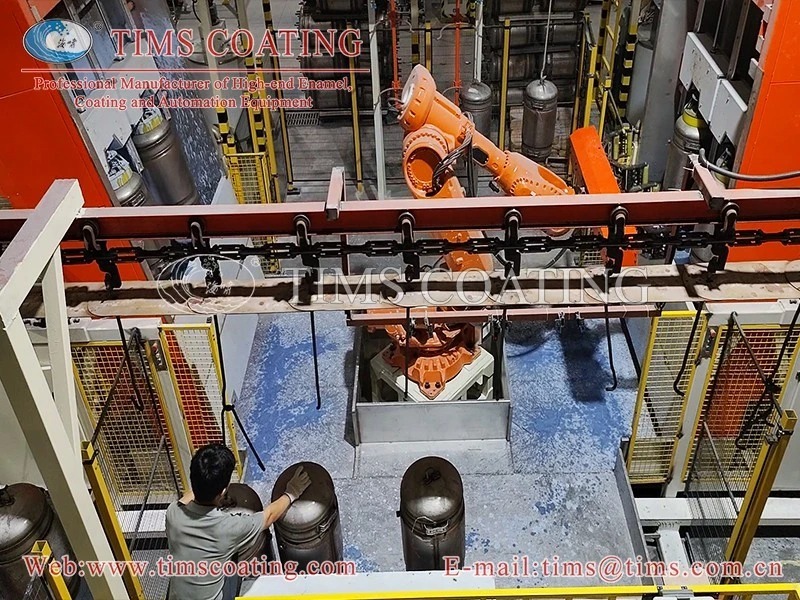
Without a robust pretreatment regimen, even the most advanced electrophoresis technology will fail. Contaminants such as mill oils, shop dirt, oxidation, and welding scale act as barriers, preventing the paint from bonding effectively at a molecular level. This leads to common defects like pinholes, craters, and poor salt spray performance. TIMS recognizes that the stability of an automated production line relies on the consistency of these early stages. By integrating precision-engineered systems, manufacturers can ensure that every workpiece—regardless of its structural complexity—enters the coating stage with a perfectly prepared surface, thereby maximizing material utilization and minimizing costly rework or product failures in the field.
The Deep Dive into Electrophoretic Coating Pretreatment Stages
A professional electrophoretic coating pretreatment process typically involves several critical chemical and mechanical stages. The first step is degreasing, which uses alkaline cleaners to remove organic contaminants like lubricating oils and protective waxes. This is often followed by multiple water rinses to prevent cross-contamination between chemical tanks. For metal substrates, pickling or rust removal is the next vital phase. Using acidic solutions, this step eliminates oxides and scales that have formed during storage or fabrication, revealing a clean, active metal surface. If these oxides remain, they can interfere with the electrical conductivity required for the electrophoresis process, resulting in uneven coating thickness or "starving" of certain areas.
Perhaps the most transformative stage in the pretreatment sequence is phosphating. During this phase, a crystalline phosphate film is chemically grown on the metal surface. This micro-porous layer serves two primary functions: it provides a massive increase in surface area for the paint to latch onto, and it acts as a secondary barrier against corrosion if the paint layer is ever scratched. Following phosphating, the parts undergo passivation (or a chrome-free seal) and final deionized water rinsing. These final steps are crucial because any residual ions on the surface can cause "osmotic blistering" under the paint film. TIMS systems are designed to monitor these chemical concentrations in real-time, ensuring that the pretreatment environment remains within tight tolerances to support continuous, high-volume production cycles without degradation in quality.
Strategic Solutions for Enhanced Adhesion
From a strategic standpoint, investing in advanced electrophoretic coating pretreatment technology is an investment in the longevity of the finished product. Experience in the field shows that over 80% of coating failures are directly traceable to inadequate surface preparation. Modern solutions now incorporate AI-powered thickness control and real-time defect detection via hyperspectral imaging to ensure that the pretreatment layer is applied uniformly. This is particularly important for workpieces with intricate internal cavities, such as automotive frames or dishwasher interiors. In these cases, the pretreatment must reach every corner to prevent "internal corrosion," which can weaken the structural integrity of the part over time without being visible from the outside.
Furthermore, the integration of modular design in pretreatment lines allows manufacturers to adapt to different substrates—such as transitioning from carbon steel to aluminum—without a complete overhaul of the equipment. This flexibility is a hallmark of TIMS engineering, enabling factories to remain agile in a changing market. Strategic insights also suggest that the temperature and pressure of the spray or immersion cycles must be precisely calibrated. For instance, if the alkaline degreasing tank is too cold, the oil removal will be incomplete; if it is too hot, it may cause dry-on stains that are even harder to remove. By mastering these variables, a facility can achieve a coating that exceeds 1000-hour salt spray tests, which is a standard benchmark for high-end industrial and automotive components.
Quantifiable Benefits of Optimized Pretreatment
The benefits of a well-executed electrophoretic coating pretreatment are both qualitative and quantitative. Firstly, it significantly improves the transfer efficiency of the electrophoresis tank. When the surface is properly activated, paint particles deposit more readily and evenly, which reduces the amount of electrical energy required and minimizes paint waste. This environmental efficiency is complemented by a reduction in Volatile Organic Compounds (VOCs), as the E-coating process is water-based and highly contained. For companies looking to meet ISO 12944 or EN 10209 standards, the pretreatment stage is the single most important factor in achieving the required corrosion-resistance categories.
Moreover, production throughput is greatly enhanced. An optimized pretreatment line reduces the need for manual inspection and rework, allowing for a continuous flow of 600 to 800 square meters per hour in high-capacity systems. The durability of the final finish also means fewer warranty claims and higher customer satisfaction. For example, appliance manufacturers using TIMS technology have reported a substantial decrease in surface defects on dishwasher panels and oven interiors, where the environment is harsh and chemical resistance is paramount. By focusing on the foundational chemistry of the pretreatment, manufacturers can achieve a finish that is not only beautiful but also capable of withstanding extreme temperatures and UV exposure for decades.
Why Choose TIMS for Your Coating Needs?
At TIMS, we specialize in providing turnkey solutions for the most demanding industrial coating applications. Our expertise extends across the entire spectrum of surface finishing, from manual spray setups to fully automated, IoT-enabled production lines. We understand that the heart of any successful operation lies in the electrophoretic coating pretreatment, which is why our systems are engineered for maximum reliability and precision.
Our product range includes:
- Automated Electrophoresis Lines: Optimized for automotive and appliance components with AI-powered thickness control.
- Powder Coating Systems: High-efficiency powder coating production line equipment featuring advanced electrostatic technology.
- Enamel Production Lines: Specialized enamel production line equipment for water heater tanks and architectural panels.
- Smart Pretreatment Systems: Utilizing spray or immersion methods with closed-loop filtration for eco-conscious manufacturing.
Our strength lies in our ability to customize every line to the specific factory layout and capacity needs of our clients. With over a decade of experience, TIMS has helped global brands like Haier improve their production capacity while reducing energy consumption through our patented waste heat recovery technologies. Whether you are dealing with large-scale architectural cladding or high-precision automotive compressors, our automated production line equipment ensures a predictable, high-volume output of perfectly coated products.
Frequently Asked Questions
What are the primary stages of electrophoretic coating pretreatment?
The process typically includes degreasing to remove oils, pickling to remove oxides/rust, and phosphating to create a receptive surface for the paint. Each stage is followed by meticulous rinsing to ensure no chemical carryover occurs.
How does electrophoretic coating pretreatment influence corrosion resistance?
Pretreatment creates a chemical bond between the metal and the coating. Specifically, the phosphating layer acts as a barrier that prevents corrosion from spreading underneath the paint film, even if the surface is physically damaged.
Can TIMS customize the electrophoretic coating pretreatment for different metals?
Yes, our systems are modular. We can configure the chemical stages and tank sequences to handle carbon steel, aluminum, cast iron, and other substrates within the same production facility.
Does the quality of electrophoretic coating pretreatment affect energy consumption?
Absolutely. A clean, well-pretreated surface has better electrical conductivity, which allows the electrophoresis process to occur more efficiently at lower voltages, thereby reducing overall power consumption.
What maintenance is required for an electrophoretic coating pretreatment system?
Regular maintenance involves monitoring chemical concentrations, cleaning spray nozzles, and managing the sludge in the phosphating tanks. TIMS provides automated dosing systems to simplify this process and ensure consistency.
Conclusion
In summary, the role of electrophoretic coating pretreatment cannot be overstated. It is the foundation upon which all subsequent coating quality is built. By ensuring a pristine, chemically active surface, manufacturers can guarantee superior adhesion, unmatched corrosion resistance, and a flawless aesthetic finish. TIMS remains dedicated to pushing the boundaries of coating technology, offering sustainable and high-efficiency solutions that drive productivity and product longevity.